
A lot of eCheck players don’t know that you can withdraw back to eCheck. You absolutely can, but do you have the patience to wait?
Everything is lightning paced nowadays, from videos to content to deposits, and yes, withdrawals too.
Most people don’t have the patience to wait hours for a deposit, let alone days or weeks.
So what’s the solution?
It depends, are you ok with a couple of hours or days for a withdrawal? Then eWallets are perfectly fine. But if you’re anything like me and want your withdrawal in minutes, crypto is the only way to go.
Why is crypto so much faster?
Crypto doesn’t require a middle man network. What’s a middle man you may ask.. Think clearing house, corporate banking rules, clerk approving transactions manually – crypto requires none of that. The evolution of modern instant payout casino frameworks has made legacy checks obsolete.
When you withdraw Bitcoin, Litecoin, or Ethereum, the transaction moves on a decentralized blockchain.
As soon as the casino approves your withdrawal from their end, a piece of automated code sends the funds directly to the network. Blockchains never sleep. They don’t care about weekends, bank holidays, or Canadian statutory breaks.
Computers spread across the globe verify the transaction in minutes, and the money lands in your personal wallet almost immediately after. Or well, almost. The transaction still needs to be confirmed, but we’re not gonna dig that deep today, you can read more about it here if you’re interested.
Comparing the speeds between crypto and eCheck withdrawals
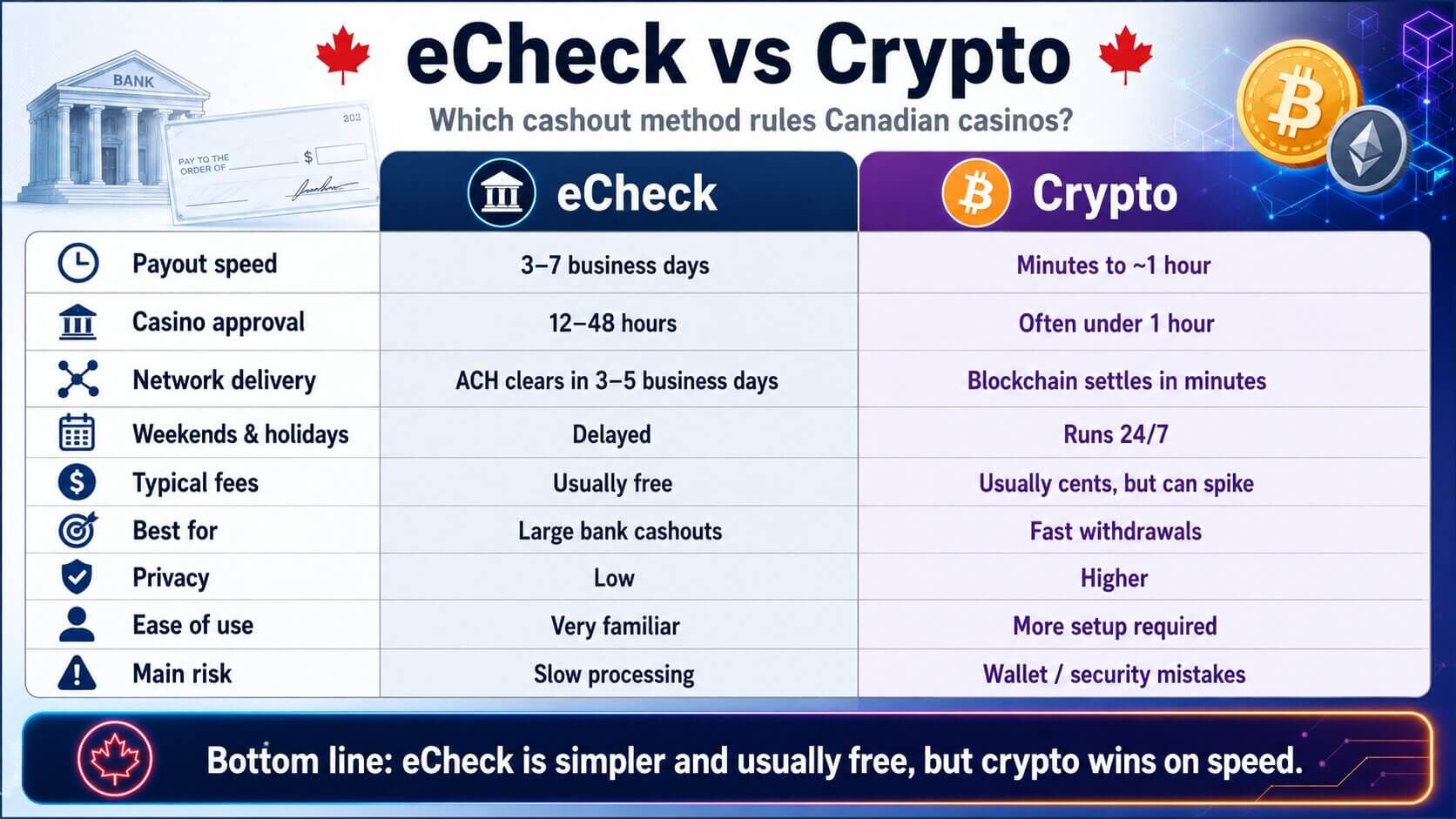
When you look at the raw timeline, the gap between these two options is massive. Every withdrawal has two parts: the time the casino takes to approve it, and the time the network takes to deliver it.
- eChecks: The casino takes 12 to 48 hours to approve the payout. After that, the ACH network takes another 3 to 5 business days to clear the funds into your Canadian bank account. If you cash out on a Friday night, the process won’t even start moving until Monday. Total wait time is easily 3 to 7 business days, sometimes much more.
- Cryptocurrency: The casino review still takes a bit of time (though crypto casinos often automate this to under an hour). Once approved, the network transfer takes minutes, sometimes seconds. And weekends don’t slow it down at all.
The Cost of Cashouts: Processing Fees
Speed is a major factor, but you also have to look at what you are paying to move your money.
With eChecks, the good news is that regulated Canadian casinos almost never charge you a fee to receive your winnings. Your own bank might have a tiny transaction fee depending on your account type, but it is generally a free way to move massive amounts of cash.
Crypto is different. Every time you move crypto, you have to pay a network fee to the miners or validators processing the transfer. If you use networks like Solana or Ripple, these fees are worth fractions of a cent.
But if you withdraw via Bitcoin or Ethereum during a busy market hour, those network fees can easily jump to $10 or $20 CAD, regardless of how much you are withdrawing.
But in most circumstances, crypto fees won’t cost you more than a few cents.
Security vs. Privacy: The Big Trade-Off
Here’s the problem. If you’re not crypto savvy, and especially if you’re using a non-custodial wallet, you need to be absolutely vigilant about security.
What if you’re computer has some malware that has access to your private keys? Hint: if you’re an average person like me, you can’t really be 100% sure. It almost takes a security scientist to figure this stuff out. But there are ways!
One way to improve your security is to use a cold storage wallet. That means using a Trezor or a Ledger device. These are small hardware dongles that give you a whole different layer of security.
Nobody can take your money from your crypto wallet unless you confirm it with your hardware device. Just make sure your private keys or seed phrases are never written on your computer, and you’re safe. Then nobody can have access to your money but you.
The drawback is that you have to remember your passwords, codes, or have them written physically on a piece of paper. And that comes with risks of its own.
The other solution is to send your money off to an exchange, like Binance, Kraken, or Coinbase. But that also comes with a risk, there’s a phrase that goes “not your keys, not your coins”, meaning that the exchange controls your crypto and can freeze it if they suspect any shenanigans.
So what’s better, crypto or eCheck? It’s entirely up to you, but now you know the benefits of risks of each payment method.